Last updated November 21, 2026
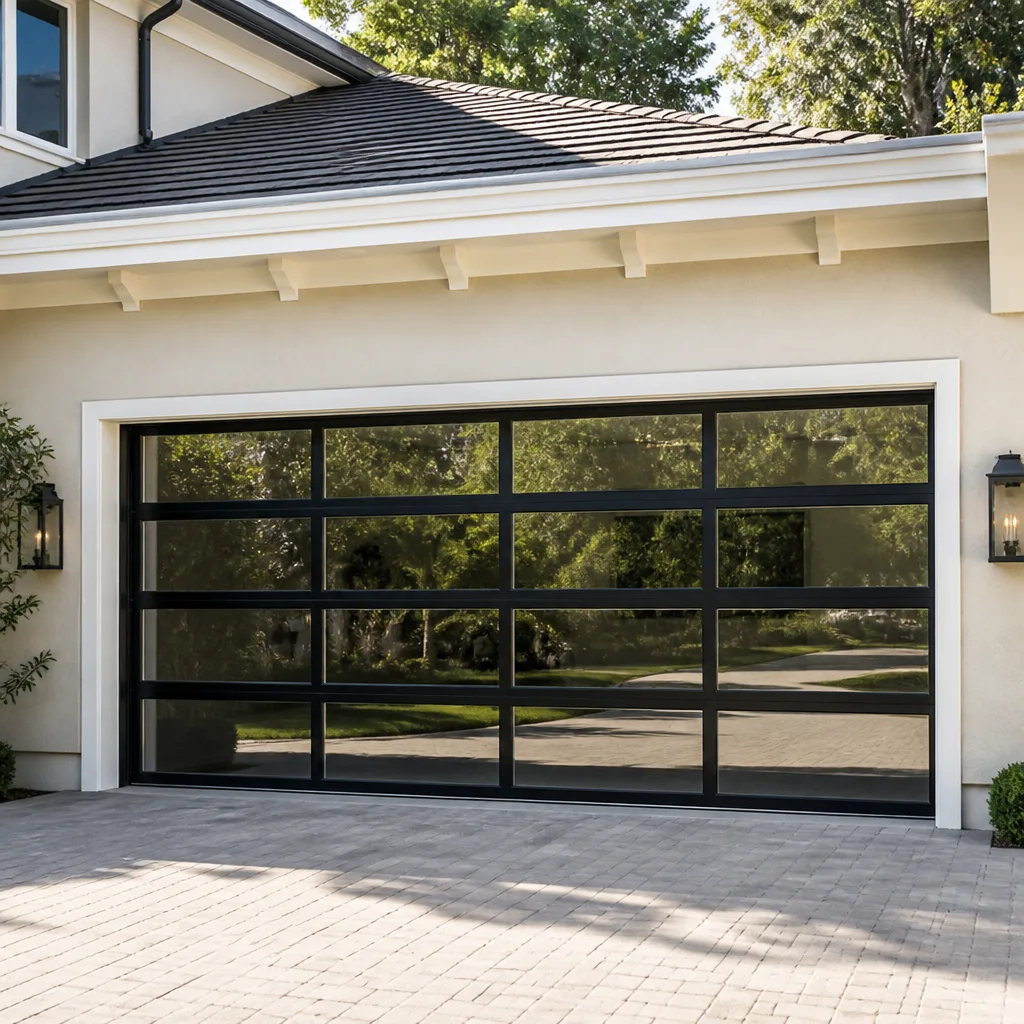 Full-view glass
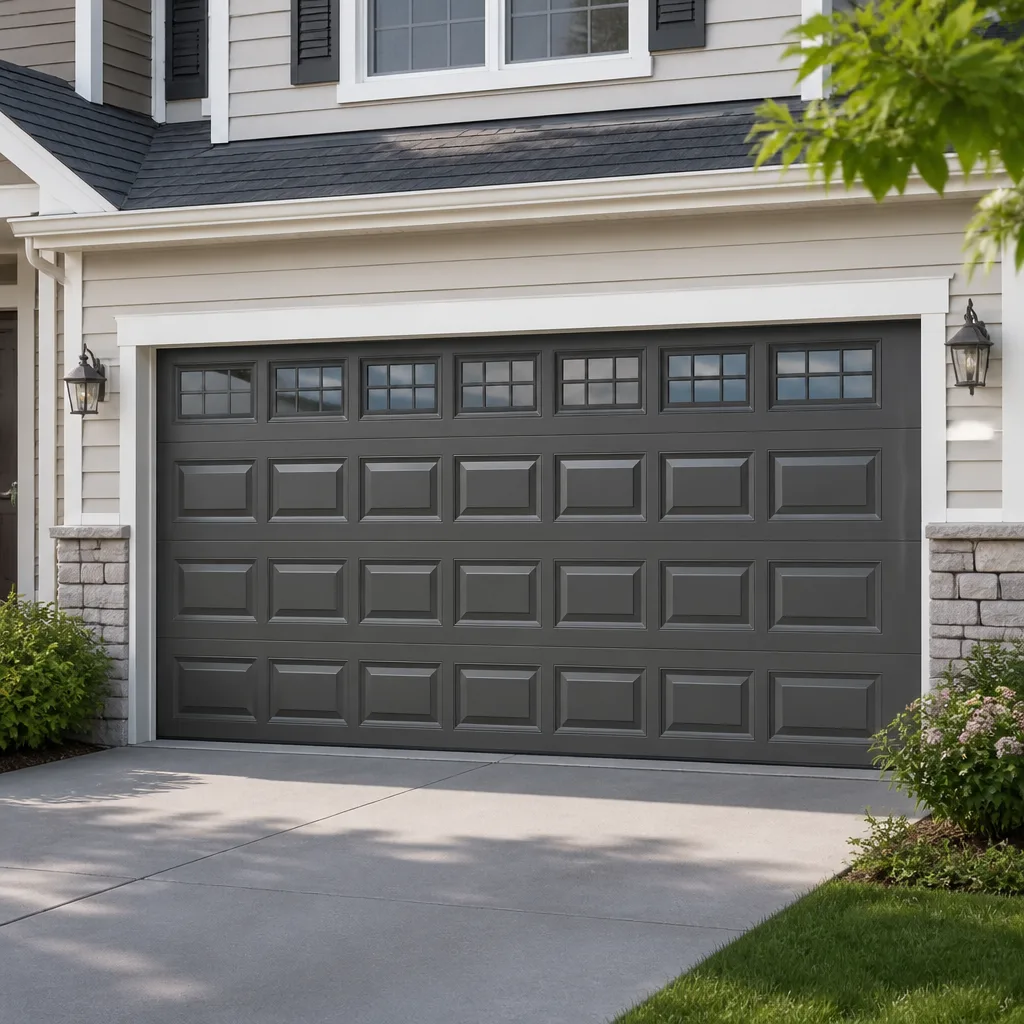 Raised-panel steel
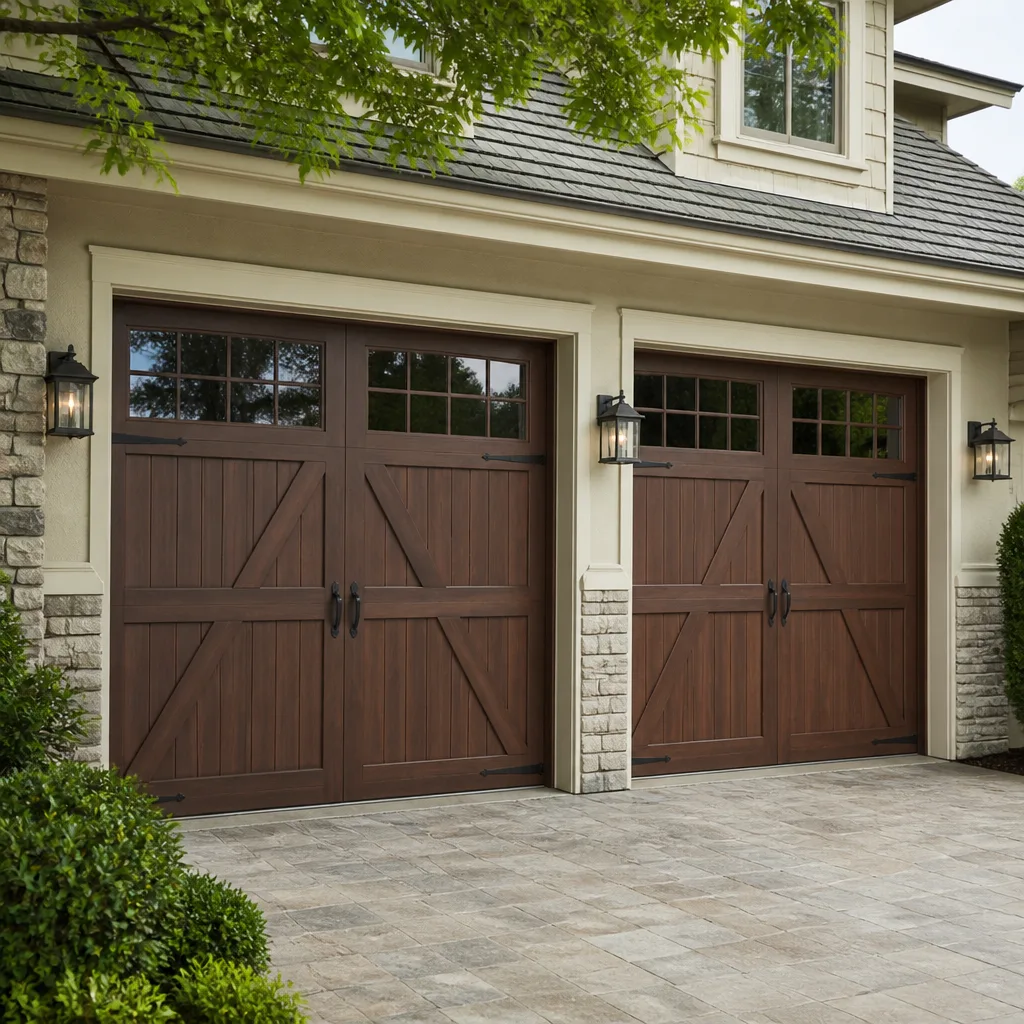 Carriage house
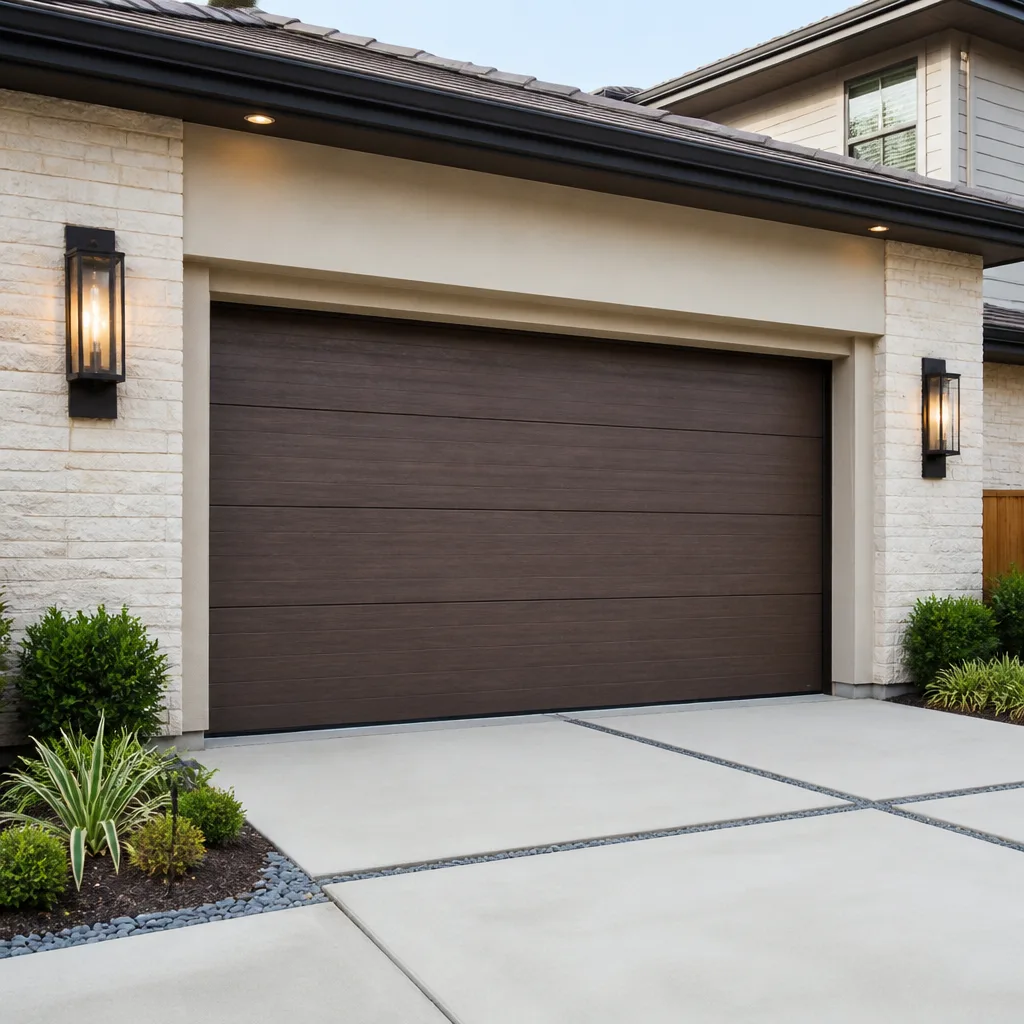 Modern flush
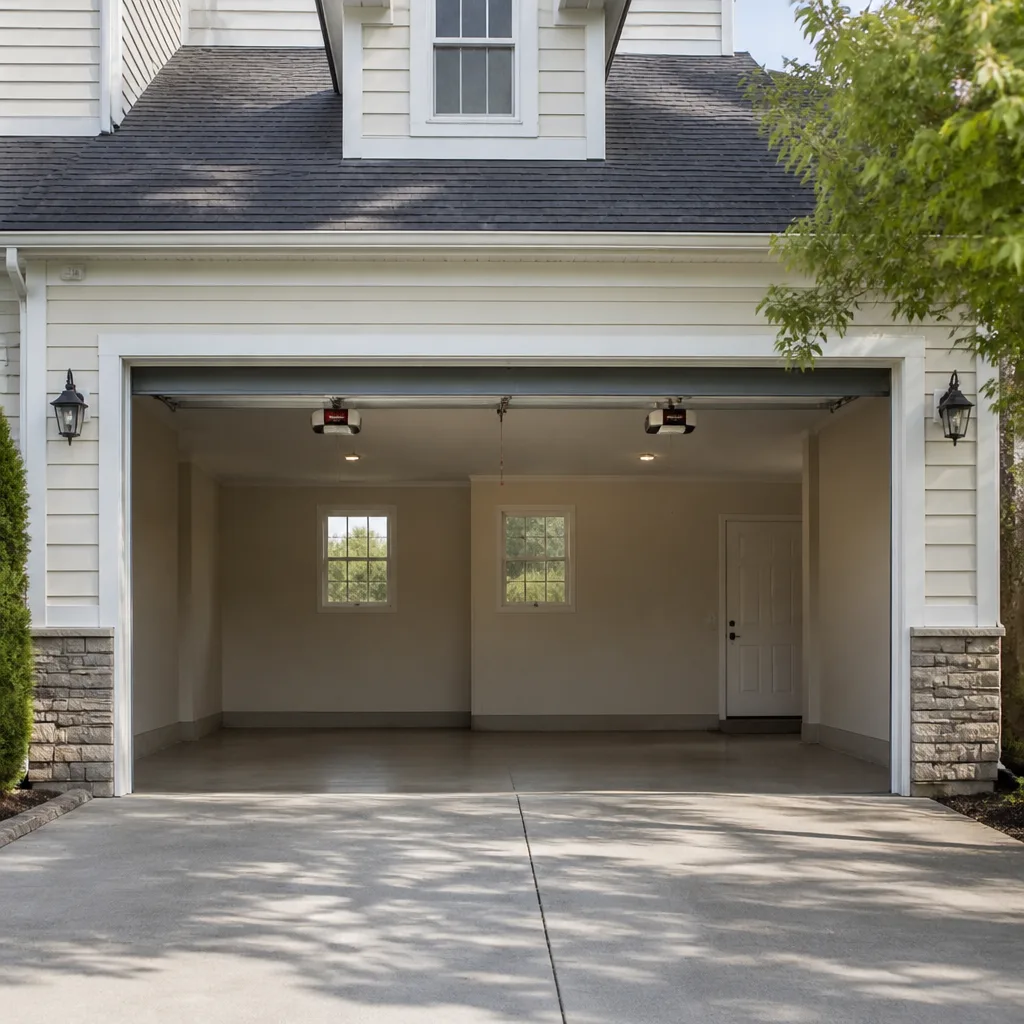 LiftMaster openers
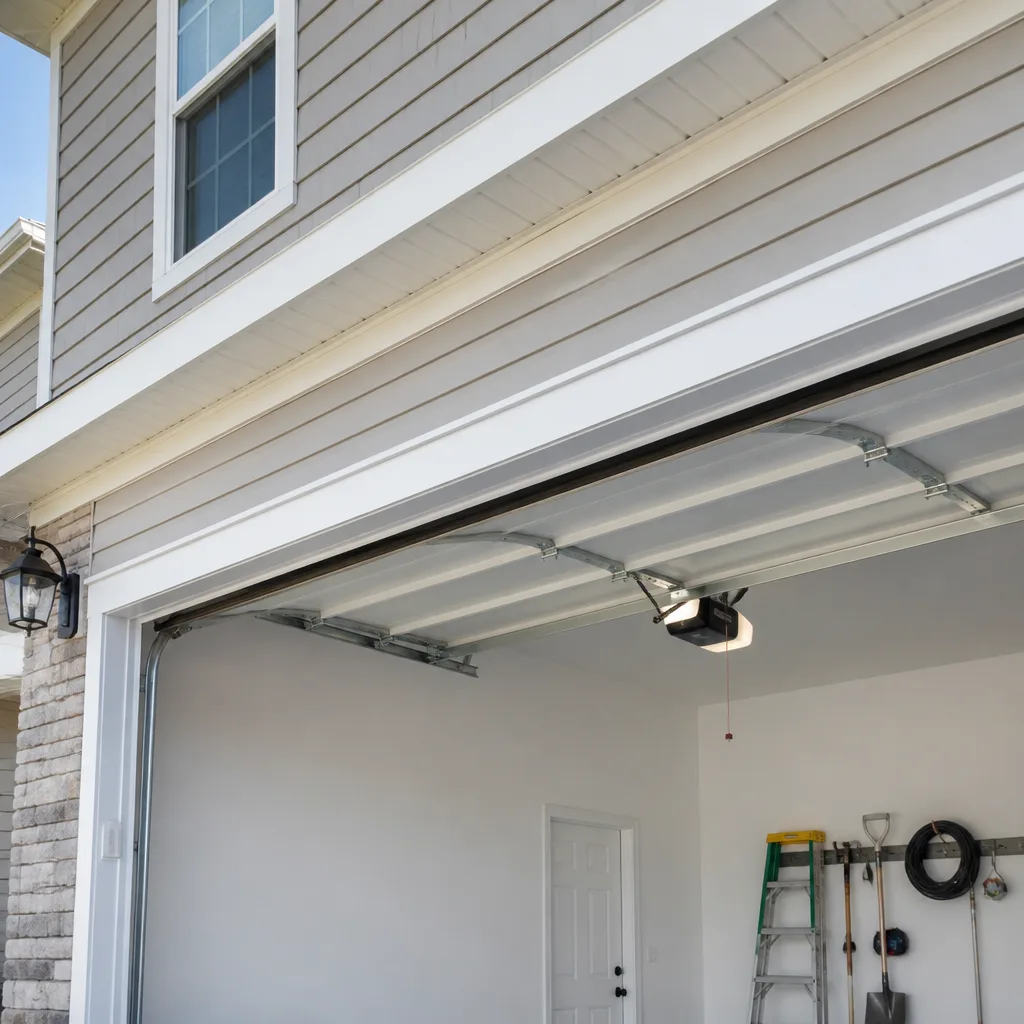 Chamberlain openers
Full 25-point door and opener safety check with every visit - springs, cables, rollers, tracks, and your LiftMaster or Chamberlain opener included
You get a price before we start. It does not change when the pro arrives.
Get your free estimateSeasonal Garage Door Care for Lake View: Year-Round Homeowner’s Guide
Ask most homeowners in Lake View when a garage door is most likely to fail and they’ll say January. In our experience, it’s often the other way around. Openers quit more often in August than in deep winter, because heat expands steel tracks, humidity swells older wood frames, and the two push against each other until a motor quietly burns itself out over a whole summer. You don’t notice the strain building. You notice the door that won’t open in October. This guide walks through what each of Lake View’s four real seasons does to a door, what to check and when, and which adjustment you should never attempt yourself.
Quick Answer
A garage door in Lake View needs different attention in each of the four seasons: alignment checks after summer heat, a specific lubrication sequence before the first freeze, careful ice and seal handling in winter, and a post-thaw inspection of the concrete apron and frame in spring. Skipping any one season leaves a failure mode unaddressed, which is why a door that “just got serviced” can still break down within a year and a half. The one adjustment to leave alone in every season is spring tension.
Styles & brands we work with
- Raised-panel steel
- Carriage house
- Modern flush
- Full-view glass
- LiftMaster openers
- Chamberlain openers
Table of Contents
- Why Lake View’s Four Seasons Each Break a Door Differently
- Summer: Heat Expansion and Track Alignment
- Fall: The Lubrication Sequence Before First Freeze
- Winter: Frozen Seals, Iced Thresholds, and Cold Metal
- Spring: Post-Thaw Inspection of Apron and Frame
- The One Adjustment You Should Never Make Yourself
- Brand-Specific Care: Why the Make of Your Door Matters
- A Simple Year-Round Checklist for Lake View Homes
Why Lake View’s Four Seasons Each Break a Door Differently
A garage door is a balanced machine. Springs carry the weight, tracks guide it, rollers reduce friction, and the opener supplies a small push to get it moving. That balance holds only within a narrow range of temperature and humidity. Lake View hands its doors a full sweep of both every year, and each season loads a different part of the system.
Summer is about expansion. A steel track that measured correctly in April can grow enough by August to pinch a roller. Fall is about preparation. Whatever moves freely in October will resist the first hard freeze in December. Winter tests the bottom of the door, where a rubber seal meets cold concrete and ice forms. Spring exposes everything the frost did underground, from a heaved apron slab to a frame that’s shifted a fraction of an inch out of plumb.
A door serviced only in, say, spring gets one season’s adjustment and three seasons of wear. That’s the pattern behind most premature failures we see around Lake View. Here’s what each season actually asks of you.
Summer: Heat Expansion and Track Alignment
After three consecutive days around 90°F, check your door’s track alignment. Steel tracks lengthen in sustained heat while the wood or masonry they’re anchored to moves at a different rate, and the result is a vertical track that’s slightly out of parallel with the door’s travel. You’ll hear it before you see it: a scrape, a rattle, or a door that hesitates a few inches off the floor.
Here’s how to check alignment without touching the hardware:
- Open the door fully and stand back. Look at each vertical track from the floor up. It should look straight and parallel to the door edge, not bowing inward at the top or bottom.
- Run the door down slowly and listen at the halfway point. A steady hum is fine. A grinding or popping sound means a roller is binding.
- Look at the gap between the roller stem and the track edge on both sides. It should be roughly the same top to bottom. A visibly tighter gap at one end signals movement.
- Check the opener’s behavior. If the door reverses for no reason or the motor sounds labored, the binding may already be loading the opener.
What you do about a misaligned track depends on what you find. A track that’s simply loosened at a bracket is a straightforward fix. A track that’s bent needs replacement, and a track that’s drifted because the frame behind it has moved needs the frame assessed first. This is the kind of thing we look at during garage door repair calls in the summer months, and it’s usually a shorter job when it’s caught in July rather than October.
One more summer note specific to Lake View’s older housing stock: humidity. Wood frames around garage openings swell in a wet summer, and a door that fit cleanly in June can start rubbing its frame by August. If your door’s weatherstripping looks compressed or the door drags on one side, the frame may be the culprit rather than the door itself.
Fall: The Lubrication Sequence Before First Freeze
Lubricate your garage door in a specific order before the first freeze: hinges first, then rollers, then the torsion spring (if it’s the type that takes lubricant), then the opener’s rail and chain. The order matters because each component you treat leaves residue that migrates. Lubricating the spring before the hinges, for example, can leave a film on hinge pivots that attracts grit all winter. Doing it in the right sequence keeps each surface clean and lets you feel the difference as you go.
Here’s the sequence we recommend, and why each step sits where it does:
- Hinges. A drop of garage-door lubricant at each hinge pivot. This is where most cold-weather squealing comes from, and treating hinges first means the rollers you do next won’t pick up debris from dry hinge pins.
- Rollers. A light application on the roller stems, not the track itself. Rollers carry the door’s weight against the track; dry rollers flat-spot in cold and start thumping.
- Torsion spring. Some springs are sealed and need nothing. Others benefit from a light coat that limits corrosion over the wet months. If you’re unsure which type you have, leave it and ask a technician.
- Opener rail and chain. Use the lubricant your opener’s manufacturer specifies. Chamberlain and Genie both publish guidance for their rail and belt systems, and using the wrong product on a belt drive can cause slipping.
- Bottom seal. A thin wipe of silicone keeps the rubber from bonding to cold concrete. Skip petroleum-based products here; they degrade the rubber.
Do this once in the fall, before the first hard freeze, and you’ll notice the difference the first cold morning the door opens. If your opener is the part that’s been acting up all year, garage door opener repair is worth scheduling before winter puts extra demand on it.
Winter: Frozen Seals, Iced Thresholds, and Cold Metal
Never force a frozen bottom seal free by pulling the door up. The rubber bonds to cold concrete and ice, and pulling stresses the seal, the bottom section, and the opener all at once. Instead, break the bond from outside: pour warm (not boiling) water along the threshold line, or use a rubber mallet lightly along the seal’s outer edge from the driveway side. Give it a minute, then try the door.
Clearing ice from the threshold is a separate job from freeing the seal. Use a plastic scraper or ice melt designed for concrete, never a metal shovel or an ice pick, both of which chip the apron and leave a rough surface that holds water next winter. Rock salt is hard on concrete and on the seal itself; a calcium-based or sand-and-salt mix is gentler on both.
Cold metal behaves differently too. Steel contracts in the cold, and a door that ran quietly in November can develop a slight rattle in January as clearances open up. That’s normal up to a point. What isn’t normal is a door that stops partway down, reverses on its own, or sounds like something is grinding. Those suggest a component has shifted, and cold weather is when failing springs and worn rollers announce themselves.
One Lake View-specific winter point: lake-effect snow means freeze-thaw cycles come and go through the season, not just once. Each thaw refreezes the meltwater at your threshold. Keeping the apron clear and the seal lubricated is what stops that cycle from gluing your door shut every other week.
Finally, don’t leave a door open in freezing weather for long stretches. Cold air on a warm motor, and then warm air on cold metal, is a fast way to stress both. If your opener has been struggling, winter is not the season to push it harder.
Spring: Post-Thaw Inspection of Apron and Frame
After the ground thaws, inspect the concrete apron in front of your garage for heave. Frost moves the ground under a slab, and a slab that lifts by even a fraction of an inch takes the door frame with it. A frame that’s out of plumb turns into a door that’s out of alignment, and the symptoms show up as a door that rubs one side, a gap along the top, or a bottom seal that doesn’t sit flat.
What to look for:
- Cracks in the apron that have widened since fall, or a slab edge that’s visibly higher than the driveway beside it.
- A gap between the bottom seal and the floor on one side but not the other. That’s the classic sign of a shifted frame.
- A door that closes but sits crooked in the opening, or one side of the top panel meeting the header closer than the other.
- Loose anchor bolts at the track brackets, which often follow a frame that’s moved.
- Water pooling at the door after rain, which means the slab has settled or heaved and the drainage slope is gone.
The fix depends on what moved. Sometimes a track bracket adjustment is enough. Sometimes the frame needs to be re-anchored, and occasionally the apron itself needs repair before the door can be aligned properly. If your door has been riding rough since the thaw, it’s worth having the whole system looked over; Garage Door Repair Lake View covers this kind of seasonal assessment alongside standard repairs. Spring is also the season to check the door’s balance, which you can do by disconnecting the opener and lifting the door halfway by hand. It should stay put. If it drifts down or shoots up, the springs need attention.
The One Adjustment You Should Never Make Yourself
Never adjust torsion spring tension yourself, in any season. A garage door’s springs hold the door’s full weight under high tension, and the tools that make this safe are specific, calibrated, and not something you’ll find in a typical homeowner’s toolbox. The seasonal urge to “just tighten it a bit” when a door feels heavy is the single most dangerous instinct in garage door care.
What makes it so risky: torsion springs are wound to carry hundreds of pounds, and the winding bars that hold them in place are under that load the entire time. A bar that slips, or a spring that fails while you’re near it, can cause serious injury in a fraction of a second. This isn’t a task where care and patience substitute for training. There’s no safe version of it done without the right equipment and the experience to read what the spring is telling you.
What you can safely do is recognize when spring tension is the issue:
- The door feels much heavier than it used to when you lift it by hand.
- The door opens a few feet and stops, or the opener strains audibly.
- You hear a loud bang from the garage with no obvious cause.
- The door hangs unevenly, with one side higher than the other.
Any of those means it’s time to call. Our technicians have up to 10 years of experience with spring systems, and spring repair is one of our core services for exactly this reason: it’s the part of the job where doing it wrong is genuinely dangerous. Whatever the season, leave the springs to a professional.
Brand-Specific Care: Why the Make of Your Door Matters
Garage doors and openers aren’t interchangeable, and the care that’s right for one brand isn’t always right for another. We work on eight of the most widely installed brands in North America: LiftMaster, Chamberlain, Genie, Clopay, Amarr, Wayne Dalton, Craftsman, and Raynor. Each has its own logic for tensioning, track mounting, and opener behavior, and knowing the brand shortens both diagnosis and repair.
A couple of examples. Clopay and Amarr doors, depending on the model, use different section-joint profiles and hinge placements, which changes where you check for wear and how a panel replacement is approached. On the opener side, Chamberlain and Genie have different rail systems, different force-adjustment procedures, and different safety-reverse testing. A technician who knows the brand goes straight to the right check. A generalist starts from scratch every time.
What this means for seasonal care is practical: when you lubricate in fall, use the product your opener’s manufacturer specifies, especially on belt drives. When you check summer alignment, know whether your track is a standard gauge or a heavier commercial-style profile. And when something needs replacing, having the right part on hand matters more than the brand name on the box. We keep parts across the major brands so a repair happens in one visit rather than waiting days for an order.
A Simple Year-Round Checklist for Lake View Homes
Here’s the whole guide condensed into what to do and when. Print it, stick it inside the garage door, and work through it four times a year.
- Summer (July-August): After three straight 90°F days, check vertical track alignment and listen for binding. Look at the roller-to-track gap. Note any opener hesitation.
- Fall (before first freeze): Lubricate in sequence: hinges, rollers, torsion spring (if applicable), opener rail and chain, then the bottom seal with silicone. Test the door’s balance by hand with the opener disconnected.
- Winter (ongoing): Free a frozen seal from outside with warm water or a rubber mallet, never by forcing the door. Clear ice with a plastic scraper. Watch for reversing, grinding, or a door that stops partway.
- Spring (after thaw): Inspect the apron for heave and cracks. Check for a bottom-seal gap on one side, a crooked door, or loose track anchors. Recheck the balance test.
- Every season: Test the safety reverse. Put a roll of paper towels under the door and close it; the door should reverse on contact. If it doesn’t, that’s a call.
That’s five checks, four times a year, and they cover the failure modes that actually take doors out of service around Lake View. What they don’t cover is anything to do with spring tension or track replacement, which is where a professional steps in. If you want a proper assessment of the whole system, garage door installation work starts with the same inspection, so it’s a good moment to ask whether your current door is worth continued repair or ready for replacement.
Common Mistakes to Avoid
- Servicing once a year and calling it done. A door that gets a spring tune-up in April and nothing else is three seasons short of the care it needs in Lake View, and that’s why “recently serviced” doors still fail.
- Lubricating in the wrong order. Spring first, hinges last, leaves residue that attracts grit. Follow the sequence or you’ll do more harm than good over a winter.
- Forcing a frozen seal. Pulling a door off a frozen threshold stresses the seal, the bottom section, and the opener. Free it from outside and give it a minute.
- Using metal tools on ice. A shovel or ice pick chips the apron, and a rough slab holds meltwater that refreezes at the threshold all winter.
- Skipping the post-thaw apron check. Frost moves ground, ground moves frames, and frames move doors out of alignment. Spring is when that shows up.
- Tightening spring tension yourself. The most dangerous DIY move in garage door care, and the one most likely to cause serious injury. Leave the springs alone.
- Ignoring a door that reverses for no reason. In Lake View’s summers, that’s often a binding track loading the opener, and it burns out motors quietly. Don’t wait for the motor to quit.
See the difference
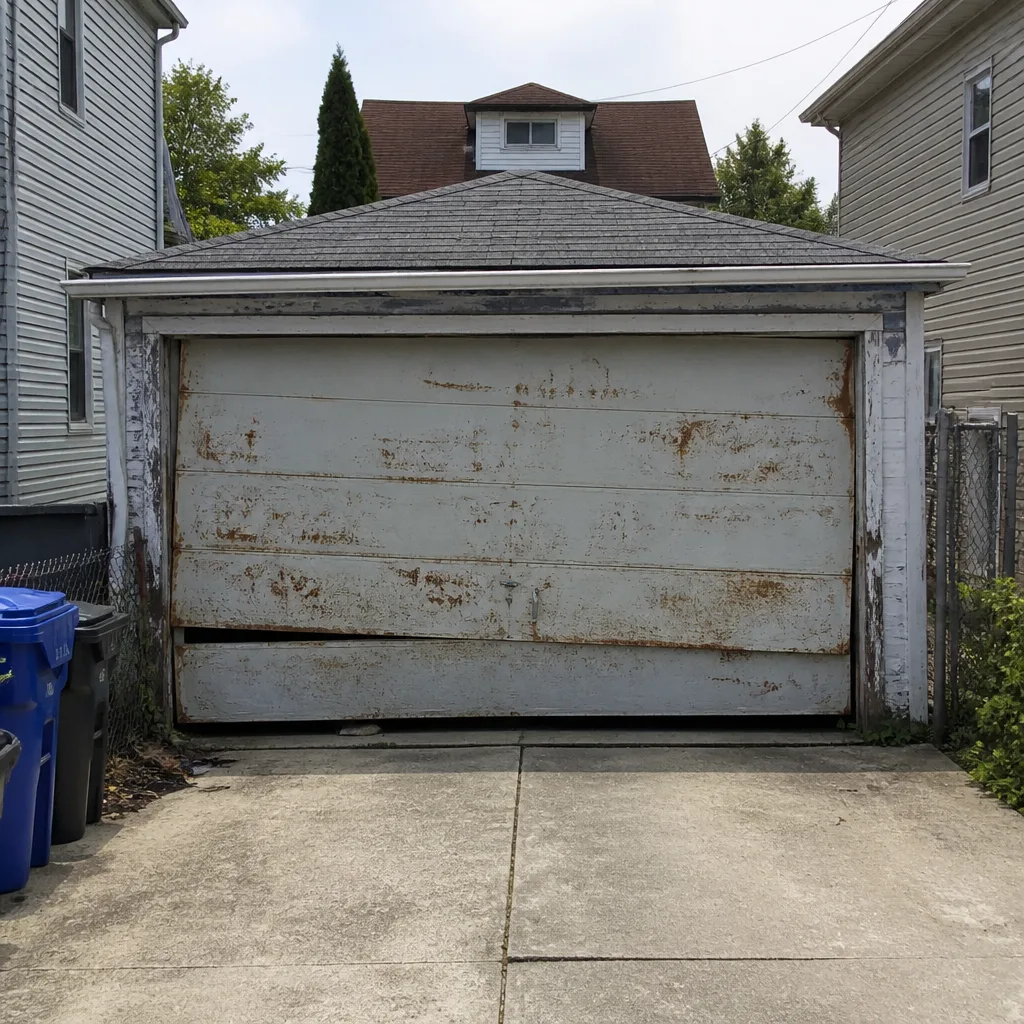 Before
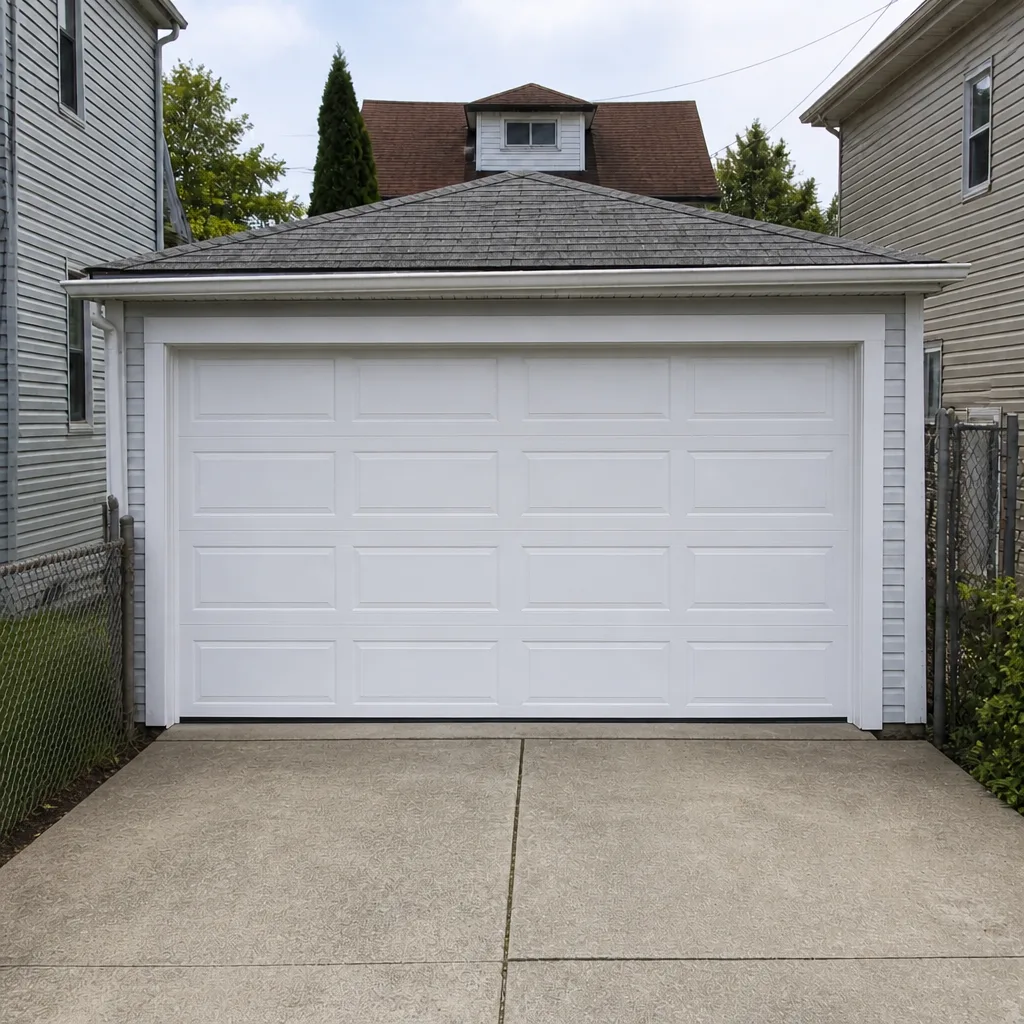 After
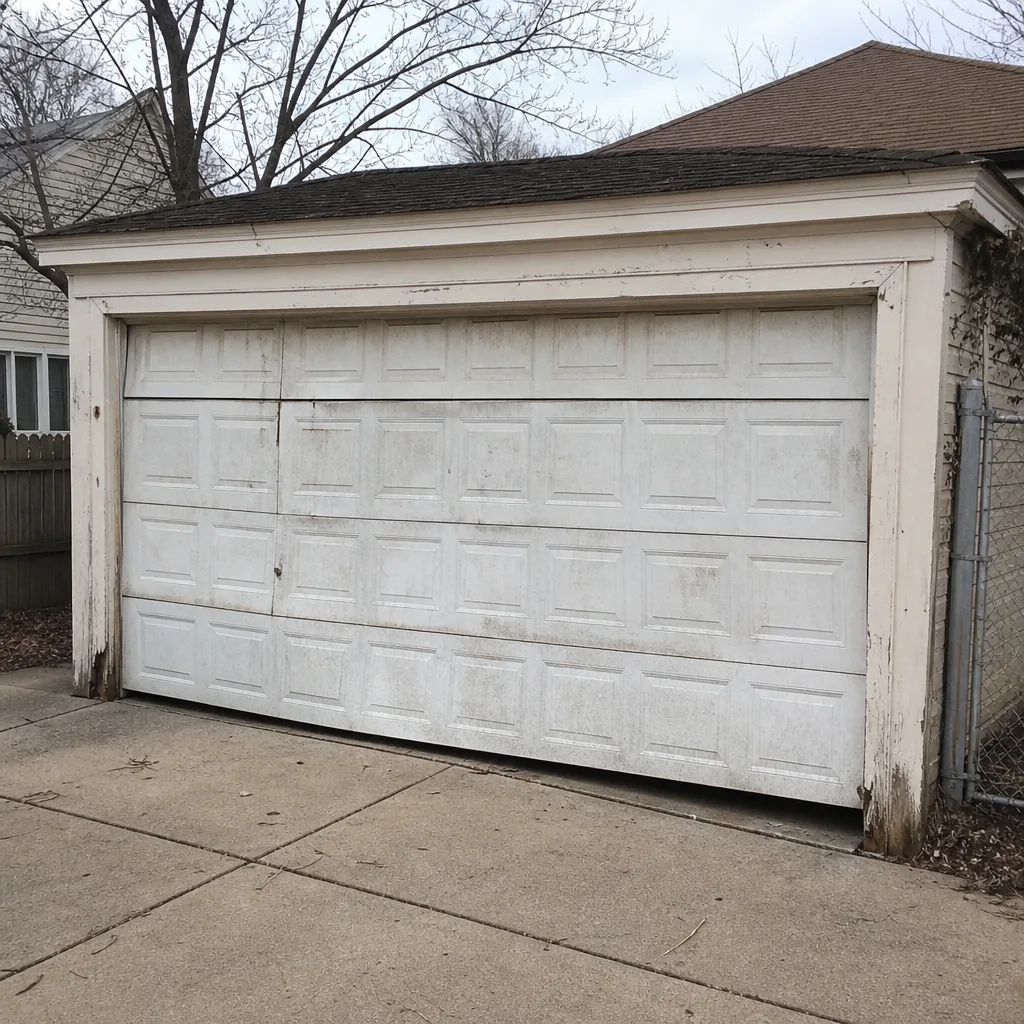 Before
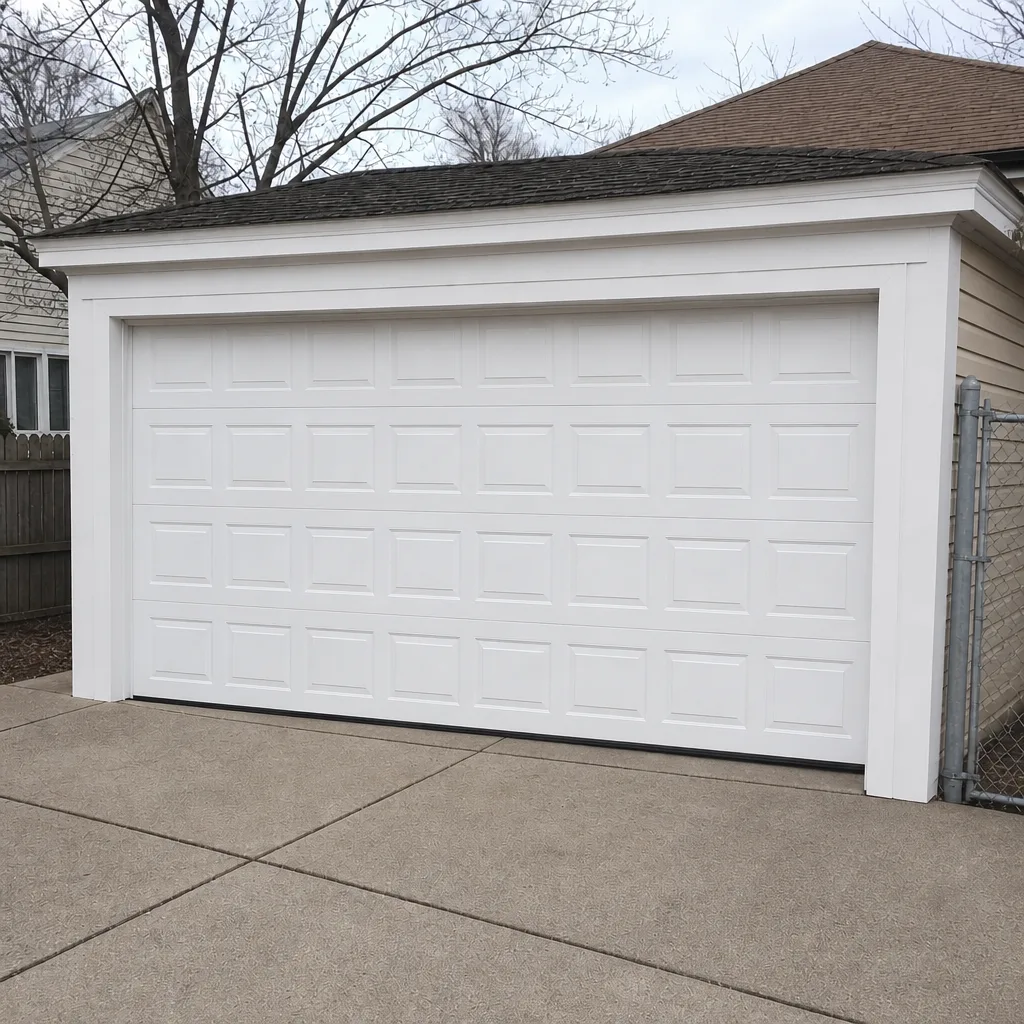 After
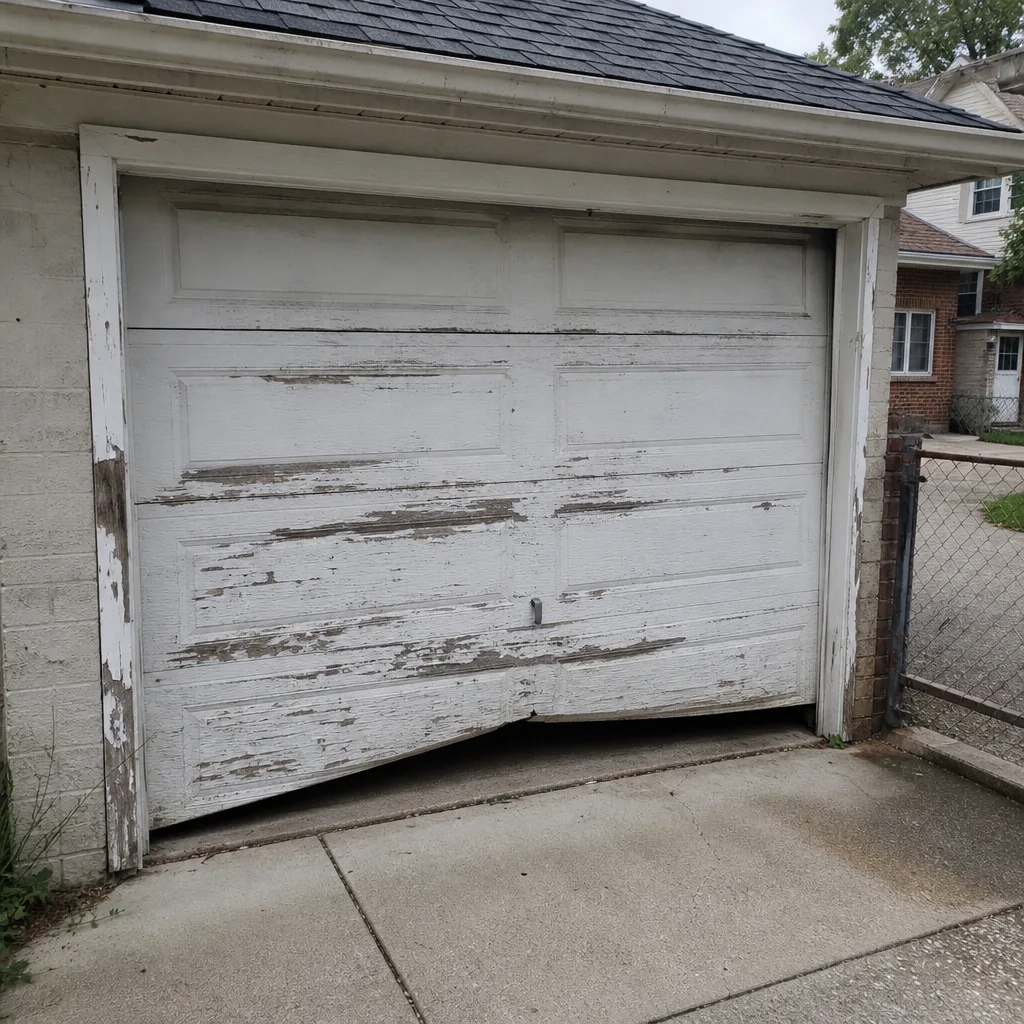 Before
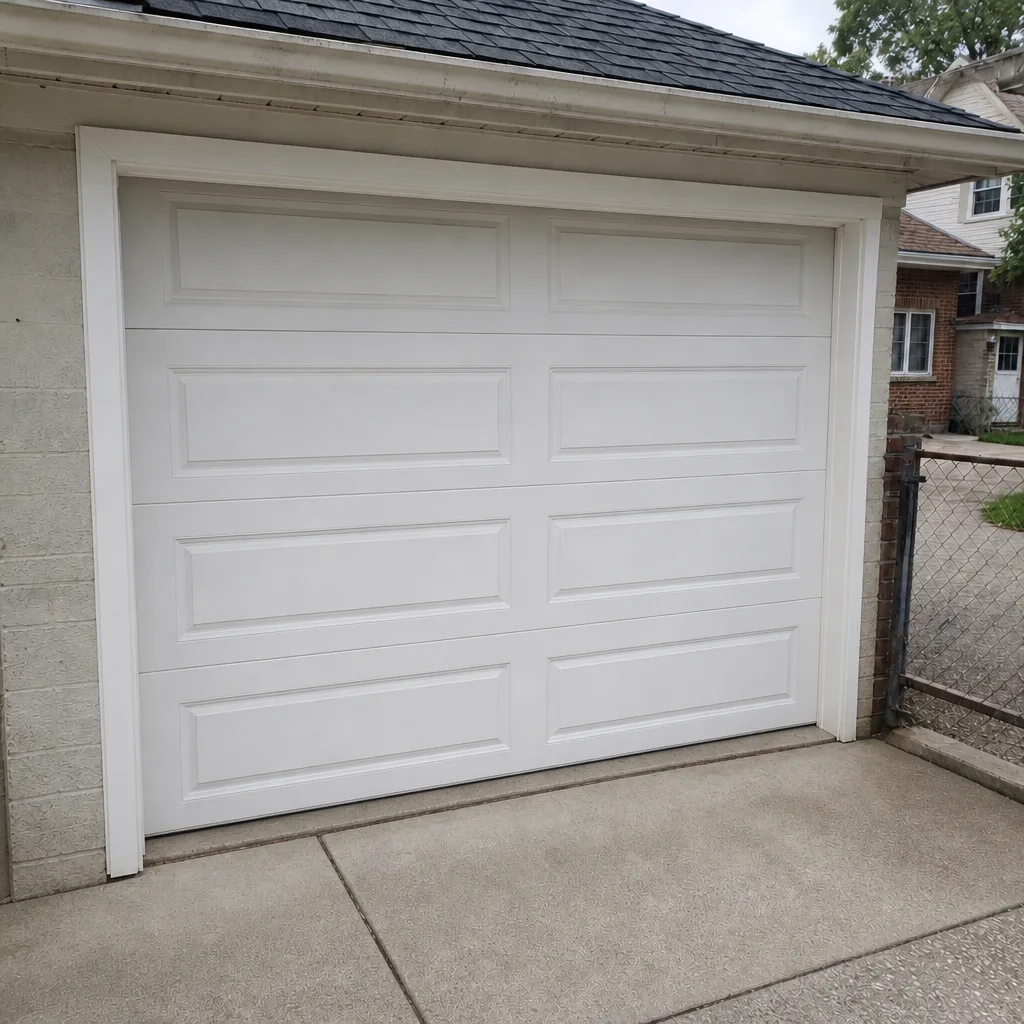 After
When to Call a Professional
Call a professional when the door reverses on its own, stops partway, hangs unevenly, or feels much heavier than it used to. Call when you find a bent track, a broken spring, or a frame that’s shifted out of plumb after the thaw. Call when your opener strains, grinds, or won’t respond to the remote after a battery change. And call if you’re simply not sure: a seasonal inspection catches more than a visual check can, and it’s cheaper than a mid-winter emergency. Garage Door Repair Lake View offers free estimates in Lake View. Call (833) 468-5605, and the written price you agree to before any work starts is the price you pay.
Frequently Asked Questions
Four times a year, matched to the four seasons. Summer alignment checks, fall lubrication before the first freeze, winter ice and seal care, and a spring post-thaw inspection. Each season addresses a different failure mode, and skipping one leaves that mode unaddressed for a full year. A yearly professional tune-up is worth it too, ideally in fall before winter puts the door under the most stress. Call (833) 468-5605 for a free estimate on a seasonal inspection.
Because heat expands the steel tracks while the frames they’re anchored to move at a different rate, and the resulting binding quietly loads the opener. Humidity swells wood frames in older Lake View garages too, which adds to the pressure. The motor often burns itself out over a summer of strain and quits weeks later when the weather turns. If you hear grinding or the door hesitates off the floor, get the alignment checked. Call (833) 468-5605 for an exact quote; estimates are free.
Yes, hinges, rollers, the opener rail and chain, and the bottom seal are all safe to lubricate yourself. Torsion springs are a different matter: if yours is unsealed and calls for lubricant, a light coat is fine, but if you’re unsure what type you have, leave it. The one thing you never do yourself is adjust spring tension. Call (833) 468-5605 if you want us to walk through what your specific door needs.
Free it from outside, not by pulling the door up. Pour warm, not boiling, water along the threshold line or tap the seal’s outer edge lightly with a rubber mallet, then wait a minute and try the opener. Clear ice with a plastic scraper, never a metal tool that chips the apron. If the door still won’t budge, the problem may be mechanical rather than ice. Call (833) 468-5605 for an exact quote; estimates are free.
Look for a gap between the bottom seal and the floor on one side but not the other, and check whether the top panel meets the header evenly across its width. Widened cracks in the apron and loose track anchors are additional signs. Frost moves the ground, and the frame follows. If you see any of those, have the frame and alignment assessed before the door’s travel wears a track. Call (833) 468-5605 for a free estimate.
No, the written estimate we agree to before any work starts is the price you pay. A seasonal check can turn up something bigger than expected, and if it does, we tell you before touching anything and you decide whether to go ahead. We give you a clear price per job, not an open-ended hourly figure. Call (833) 468-5605 for a free estimate on any seasonal garage door issue in Lake View.
The Bottom Line
Lake View’s four seasons break garage doors in four different ways, and the only reliable defense is addressing all four. Check track alignment in summer heat. Lubricate in the right sequence before the first freeze. Free frozen seals from outside and clear ice without chipping the apron. Inspect the slab and frame after the thaw. And in every season, leave spring tension to a professional, because that’s the one adjustment where getting it wrong can hurt you. Handle the other three seasons and your door’s moving parts will hold up. Handle just one and you’ll be calling sooner than you’d like.
Written by the team at Garage Door Repair Lake View.